MAKER PROFILE / CORSTON
The Small Things That Make a House
The design and engineering behind Corston's architectural details: proportion, solid brass, hand-finished surfaces and the small touchpoints that shape everyday life.

Stoop Studio
A light switch is not usually where a design story begins. It is a mechanism, an interruption in the wall, a thing we reach for without looking. Corston Architectural Detail has built a company around the proposition that such moments deserve far more attention.
Founded in 2019 by a team with decades of experience in the interiors industry, the British company designs architectural hardware, switches, sockets and lighting as parts of one coordinated vocabulary. Its goal is less about making a single object conspicuous than about getting the many small elements of a room to speak the same language.
There is something radical, in a quiet way, about treating the least glamorous specifications in a home as matters of real design. A knob should sit comfortably in the hand. A toggle should respond with confidence. A wall plate should be proportioned to the surface around it. These are humble questions, but they accumulate over hundreds of daily interactions.
How Corston began
Corston's launch followed two years of research, development and design. The idea was to bring together product engineering and an interiors perspective, making coordinated architectural details for both contemporary projects and traditional homes. Rather than begin with the assumption that a Georgian townhouse and a new apartment require completely different hardware languages, the company concentrated on proportions, tactile materials and consistent finishes.
That approach extends across categories. Switches and outlets relate to door and cabinet hardware; hardware shares finishes with lighting; an individual object is part of a larger system. This is harder to achieve than a series of attractive individual products. Components need to be designed and engineered to work reliably, while maintaining the same visual character at radically different scales.
According to Corston's company history, it opened a purpose-built headquarters in the English countryside in 2023, with space for development, engineering and a growing workshop. The company has since expanded internationally, establishing a Chicago workshop as part of its U.S. launch in 2025. For a young design brand, that is significant growth—but the premise has remained closely focused on the physical details people encounter every day.
Proportion before decoration
It would be easy to describe a good switch plate by its finish alone. Corston's design language asks more interesting questions. How thick is the plate? How does it sit against a wall? What is the distance between two toggles? Does a row of controls look orderly without feeling industrial? How does a small brass detail respond to the much larger scale of a paneled door or plaster cornice?
The company's Kew collection is known for especially slim front plates designed to sit flush to the wall. The system is intended for recessed new-work electrical boxes, which makes its almost-invisible architecture a practical decision as much as an aesthetic one. Other ranges, including Grove, have different installation requirements. These are not interchangeable styling details; the technical system shapes the finished appearance.
Then there is the feel of the control. Corston's published specifications emphasize solid-brass components, mechanisms engineered for a decisive action, and plates designed to avoid visible screws. A reassuring click is not something a photographer can capture, but it becomes part of the experience of the room.
That care is at the heart of the company's proposition: useful objects can be beautiful without behaving like decorative objects. Their elegance is tied to how efficiently and naturally they perform their job.
Why the finish is never quite finished
Corston's antique brass is a particularly interesting example of that thinking. The company begins the aging process by hand, giving the metal a more established appearance before it is installed. The result is what Corston calls a living finish: it continues to respond to air, moisture and handling, gradually developing its own patina.
This is the opposite of a surface engineered to look identical forever. Places frequently touched can change at a different rate from those rarely used. To some owners that unpredictability might be inconvenient; to others, it is the very attraction. The material records a little of the life happening around it.
Corston pairs antique brass with other finishes, including bronze and polished nickel, allowing designers to choose a different mood without losing the consistent proportions of the range. The key is that the finish is considered alongside the object's form and construction—not applied as a shortcut to character. The company's finish guide explains how these surfaces age and where they might be appropriate.
Engineering for everyday life
Good architectural details must endure more than a mood board. They are handled repeatedly, installed into complex walls and expected to work without constant attention. This is where Corston's engineering perspective becomes as important as its design taste.
The company's descriptions of its products emphasize the mechanism as well as the faceplate: the robustness of toggles, the compatibility of dimmers, the precision of screwless fronts, and installation systems suited to different wall conditions. It is an approach in which design, manufacturing and real-world performance inform one another.
Corston has also made material choices part of its public story. It reports incorporating recycled post-consumer plastics in components and back boxes, recycling brass offcuts, and using recyclable plastic-free packaging. These claims are worth evaluating as part of the brand's wider design philosophy: a fitting intended to last for many years ought to be considered from its production through to its eventual replacement. The company's published impact report details those choices.
There is a useful distinction here between craftsmanship as a romantic idea and craftsmanship as reliable execution. For a switch or outlet, precision is not just about looking carefully finished. It is about being installed correctly, functioning safely and feeling good to use long after the room has been photographed.
The everyday objects worth thinking about
Part of Corston's appeal is that its products do not demand a particular style of interior. A restrained brass switch can sit beside Victorian paneling, contemporary plaster walls or dramatic wallpaper. The piece does not need a period costume to feel at home in an old building, nor does it look out of place in a modern one.
For us, that flexibility is valuable. We love historic houses, but we are not trying to freeze them in time. The details introduced into a renovation should respect the architecture while serving modern routines, technologies and expectations. Good hardware is one of the most practical places to make that balance visible.
The Stoop connection
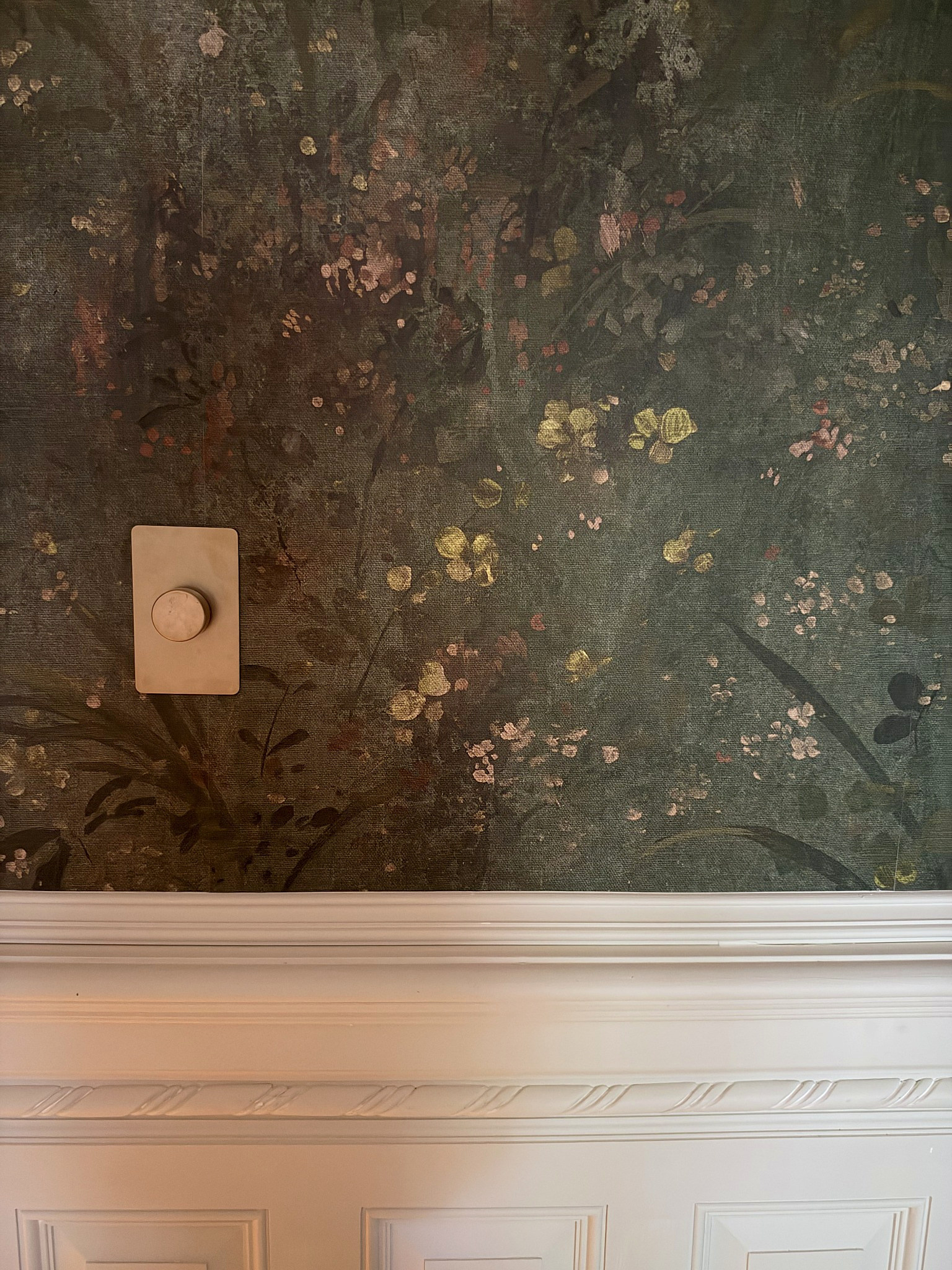
In a recent townhouse project, we specified Corston's Kew antique-brass switches and outlets throughout the house. The collection's quiet proportions and warm, changing finish worked with everything from crisp white paneling to dark botanical wallpaper. We liked that it felt considered without asking to be the most interesting thing in the room.
That project is one example of why we return to makers who think carefully about the objects people use every day. We are interested in the quality of a touch, not just the quality of a photograph.
A small object, an unusually complete idea
What distinguishes Corston is not that a toggle or a plate has suddenly become luxurious. It is the conviction that these elements belong within the discipline of design, where proportions, engineering, material and longevity are considered together. A house is made of grand architectural gestures, but it is lived through a succession of small ones.
MAKER / Corston Architectural Detail. Sources include Corston's company story, metal finishes guide and impact report. The Stoop photograph documents the use of Corston in one of our projects. This profile is independent editorial coverage, not an interview or paid partnership.